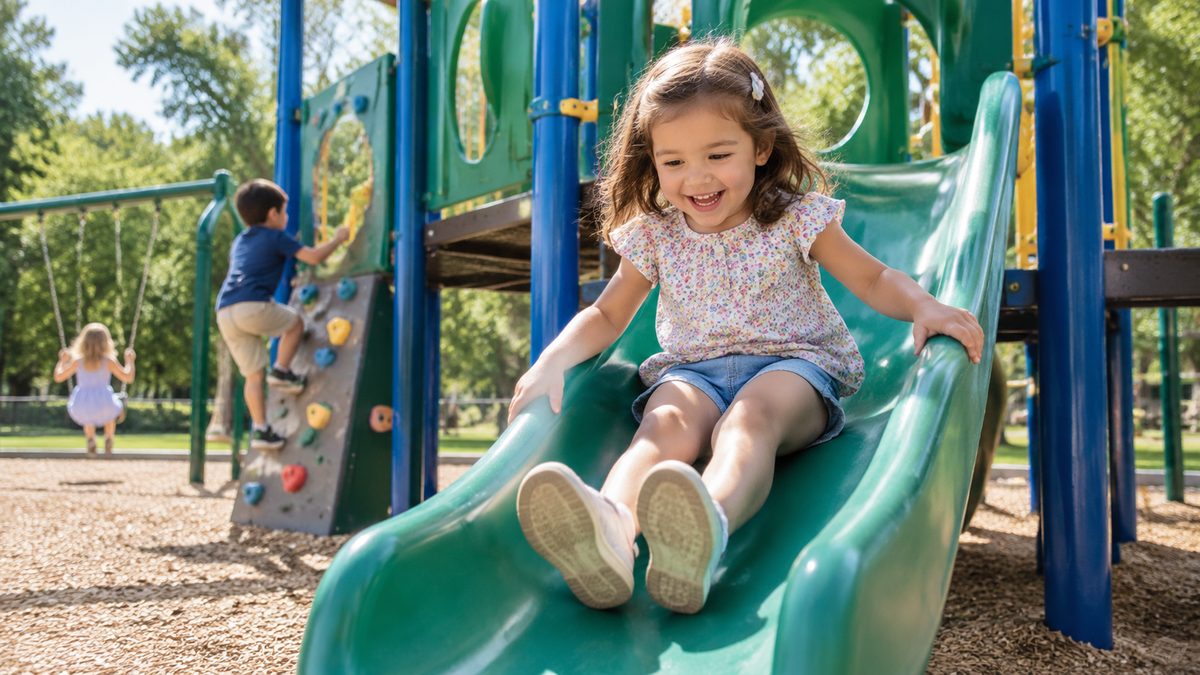
Brunswick Playgrounds for Young Children
The best Brunswick playgrounds for young children have low equipment, clear sightlines, useful shade and enough space for a child to explore without constant rescue. The right choice depends less on the size of the playground and more on how well its design fits your child's age, movement skills and habits.
A two-year-old who still tests every edge needs a different space from a confident five-year-old. A busy playground may look exciting in photos yet feel hard once fast older children arrive. A small local play area can give a young child more freedom because every part feels reachable.
This guide explains how to compare playgrounds across Brunswick, Victoria. It focuses on the details that shape a real visit with babies, toddlers and preschool children.
What makes a playground work for a young child?
A good playground lets a child do something without an adult lifting, steering or warning them every few seconds. Look for steps they can climb, platforms close to the ground and slides they can reach on their own. These features build skill through repeat play.
Young children often use equipment in ways adults do not expect. They stop at the bottom of a slide. They crawl back through an exit. They change direction on a bridge. Wide platforms and open routes leave room for these slow, uneven movements.
Clear sightlines matter as much as the equipment. A parent should be able to see the main play area from one useful position. Solid walls, thick planting and separate play zones can turn a simple visit into a constant search.
Ground-level entry can help a child start playing without being lifted onto equipment. Stay nearby and choose activities suited to their abilities.
Which safety details deserve a closer look?
Start at the boundary. A fully enclosed playground can reduce stress for families with runners, but a gate only helps when adults close it. Check whether the fence has gaps and whether the gate opens toward a road, car park or shared path.
A playground without a full fence can still work when the play area sits well back from traffic and has a clear natural edge. The risk rises when several exits lead in different directions.
Next, scan for fall points. Guardrails should protect high platforms, yet low openings may still tempt a small child. Wet decks and worn steps can become slippery. Metal slides can heat fast on a sunny day, even when the air feels mild.
Watch the flow of older children before letting a toddler enter. Fast games often run through bridges, slides and climbing areas. Waiting a few minutes may give your child a calmer start.
Check sightlines from a lower viewpoint as well as while standing. Look for blind corners, swing paths and exits that may draw a young child away.
How can you judge a playground before unpacking?
Do one slow lap while your child stays in the pram or beside you. This takes about two minutes and can prevent a rushed move later.
- Find every exit. Note gates, open paths and gaps near planting.
- Check the equipment route. See where a low climb leads and whether your child can return safely.
- Test the surface. Touch exposed slides and rubber areas on warm days.
- Choose your base. Pick a place with shade and a view of the equipment your child will use.
This first lap also reveals broken glass, standing water or maintenance work. If the space feels wrong, leave before the child becomes fixed on staying.
Does fencing matter more than playground size?
For a child who runs without warning, fencing often matters more than the amount of equipment. A small enclosed area can offer more useful play because the adult does not need to guard every boundary.
Fencing does not replace supervision. Gates open when other families arrive, and some children learn to use latches. Treat the fence as extra time to respond.
For children who stay close, an open playground may offer better play value. Grass, paths and nearby natural features can extend the visit beyond fixed equipment. The choice should follow the child's behaviour rather than a rule that enclosed spaces are always better.
What should families check for Accessibility?
Accessibility starts before the play equipment. Check the route from the footpath or parking area. A smooth, wide path helps prams, wheelchairs and adults carrying a sleeping child. Loose gravel, steep kerbs and narrow gates can make a short distance hard.
Inside the playground, ground-level activities allow more children to join in. Look for play panels, musical parts, broad paths and spaces where children can play beside each other. An accessible entrance has little value when every activity sits above a ladder.
Sensory comfort also affects access. Some children need a quieter edge away from swings and crowded climbing frames. A nearby seat or lawn gives them a place to pause without ending the visit.
Do not assume a playground is fully usable because one item has an access symbol. Follow the whole route from arrival to play, seating and departure.
How do shade, seating and toilets change the visit?
Shade can decide how long a young child plays. Built shade provides more reliable cover, while trees move in and out of useful positions as the sun changes. Check the equipment surface as well as the seating area.
A well-placed Picnic table gives adults somewhere to handle snacks, bottles and spare clothes. Its value drops when shrubs or equipment block the view. If the table sits too far away, a simple mat near the play edge may work better.
Toilets are useful, but distance matters. A toilet several minutes away may be too far for a child who gives little warning. Check opening hours where facilities appear to be locked or linked to another venue. Bring a portable change mat because a standard toilet may have no baby change area.
Bin location matters when children eat. Food scraps attract birds, and an overflowing bin can spread litter through the play area. Keep your own rubbish bag ready.
When will the playground feel easiest to use?
Early visits often suit young children because the equipment is cooler and crowds are smaller. After-school periods can bring fast play from older children. Weekend conditions change with sport, community events and nearby markets.
Weather shapes the space in less obvious ways. Rain can collect at slide exits and beneath swings. Strong wind may make tree shade feel cold. After several hot days, exposed surfaces can stay warm well into the afternoon.
A short visit at the right time usually works better than a long visit during a busy period. Leave while your child still has enough energy to walk, sit in the pram or move safely near the road.
What should you bring without turning the visit into a major trip?
Pack for the problems that end play early. Water, sun protection, a small snack and one change of clothes cover most short visits. Add nappies or toilet gear when needed.
Wet wipes help with sticky equipment, bird mess and dirty hands. A small towel can help dry a wet seat. Avoid hot equipment and return when its surfaces are safe to touch. Keep snacks simple and seated. Children who run with food can choke, while dropped food creates trouble for other families and dogs.
If you plan a Picnic, serve it away from moving equipment. Young children shift from eating to running without warning. A set eating spot makes that change easier to manage.
How can a family compare Brunswick options without chasing a perfect park?
Choose based on the visit you need that day. A toddler who needs movement may do well at a compact local playground with a low loop. A family meeting friends may need more lawn, shade and seating. A child learning to ride may value a smooth path more than another slide.
Temple Park can be one option to assess, but no single park will suit every child or every visit. Conditions also change. Equipment can close for repairs, shade moves and crowds arrive without warning.
Brunswick sits within busy inner Melbourne, so the trip to the playground deserves attention. A calm ten-minute walk may be easier than driving to a larger space, finding parking and crossing a busy road with an excited child. The nearest suitable playground often becomes the one a family uses well.
A small playground may offer enough variety for a short visit. Choose equipment the child can use with appropriate supervision, rather than judging the park by its size.
How should adults support play without controlling it?
Stand where you can reach the main risk points, then let the child solve manageable problems. A hand held out near a step gives support without lifting. Simple words such as “feet first” or “wait for space” teach a rule the child can use again.
Move closer when the child enters a new area. Step back once you have seen how they handle it. This keeps supervision tied to the real risk.
Young children also need help with other users. Teach them to wait at the slide, move away after landing and keep clear of swings. If another child is playing roughly, create distance instead of expecting small children to settle the conflict.
End the visit before hunger or fatigue takes over. A clear final routine helps: one last turn, shoes on, then leave. The routine works best when the adult follows through.
What is the best next step?
Choose one nearby Brunswick playground and inspect its exits, low-level play, shade and access route before your child starts playing. That single check will tell you more about its fit than a long list of equipment.
Editorial fact check — 11 October 2026. Merri-bek lists playgrounds at Temple Park, 24 Gray Street, and Brunswick Park, 133A Hope Street. Its Gilpin Park listing also identifies a playground in the north-east. These are options to inspect, not verified claims that equipment is fenced, shaded, toddler-specific or fully accessible. Check current conditions and supervise children. Sources: https://www.merri-bek.vic.gov.au/exploring-merri-bek/parks-and-gardens/find-a-park/temple-park/ and https://www.merri-bek.vic.gov.au/exploring-merri-bek/parks-and-gardens/find-a-park/brunswick-park/.
Explore more local guides at https://brunswicklocal.pages.dev/.
Image: AI-generated editorial illustration; it does not document a particular venue or visit.