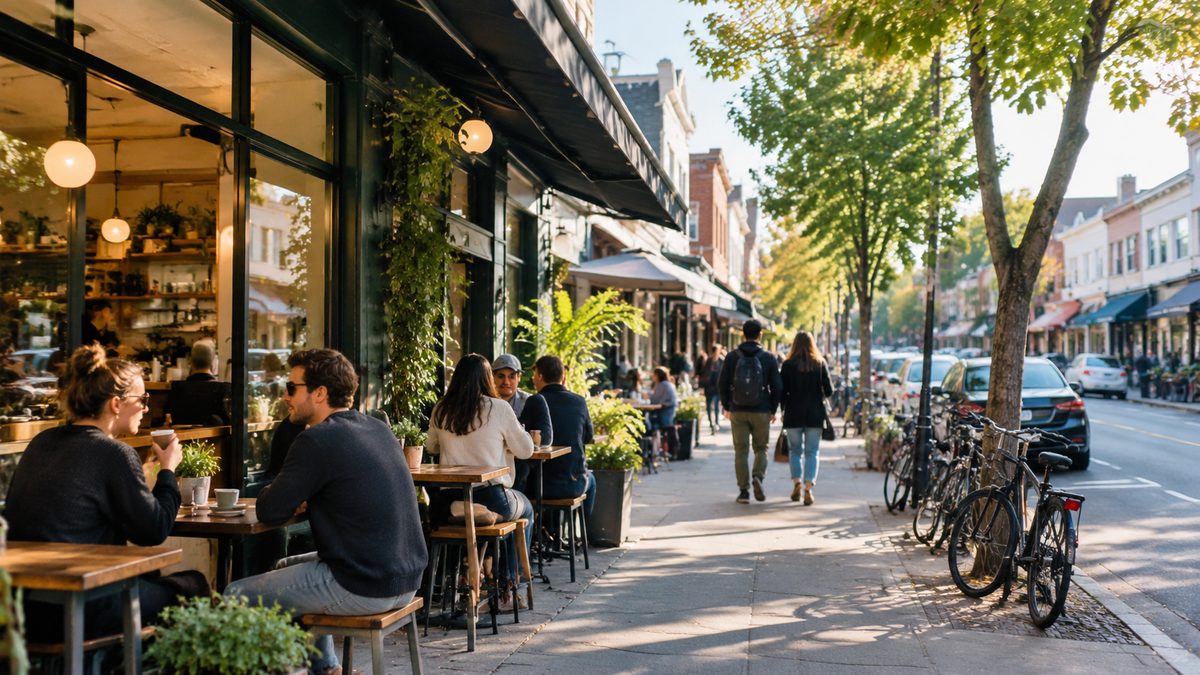
Brunswick East Neighbourhood Guide
Brunswick East suits people who want an inner-city neighbourhood with useful trams, local food, older homes, and easy access to green space. It feels close to central Melbourne without sharing the pace or building density of the Melbourne central business district. The area changes from busy main roads to quiet residential streets within a few minutes on foot. That mix shapes daily life here.
This Brunswick East neighbourhood guide focuses on how the suburb works as a place to visit or live. It covers the street layout, transport, housing, food, parks, daily services, and the trade-offs between different pockets. The main idea is simple: your experience depends less on the suburb name than on how close you are to a tram line, shopping strip, or creek corridor.
Where does Brunswick East sit within inner Melbourne?
Brunswick East lies north of Carlton North and east of central Brunswick, Victoria. Coburg, Victoria sits farther north, while Northcote, Victoria is across the creek to the east. Carlton, Victoria and the city centre are south of the suburb.
This position gives Brunswick East a useful middle ground. It is close enough for a city commute, yet far enough north to have lower streets, back gardens, bike routes, and larger open spaces. The suburb does not have one clear centre. Instead, daily activity gathers around several corridors.
Lygon Street carries many of the cafes, restaurants, shops, and tram stops. Nicholson Street forms another active edge and gives residents a second direct route south. Farther east, the streets become quieter as they approach Merri Creek. The western side connects more closely with Brunswick's Sydney Road services and railway stations.
A person choosing between these areas should think in walking time. A home near Lygon Street makes coffee, dinner, and tram trips simple. A place near Merri Creek offers calmer surroundings and faster access to paths. A western address may provide easier access to trains and the wider Brunswick shopping area.
Which streets shape daily life?
Lygon Street is the main social and transport spine. Its Brunswick East section has bakeries, bars, casual dining, small grocers, and service businesses spread along a long strip. It does not feel like a closed shopping centre. You may walk several blocks between the places you use, so the exact cross street matters.
Nicholson Street has a more practical feel in many sections. It carries trams, local shops, take-away food, and routes into neighbouring suburbs. Traffic can make homes facing the road louder, but living one or two streets back often gives residents the same access with less noise.
Blyth Street is a useful east-west link. It connects central Brunswick with the creek side of Brunswick East and passes close to community facilities. Glenlyon Road and Albert Street also help residents move across the suburb, though busy crossings can slow a short trip at peak times.
The smaller residential streets reveal the area's character. Rows of cottages sit beside townhouses, converted industrial buildings, and compact apartment blocks. Mature trees soften some blocks, while other streets have little shade. Visit the exact pocket in the afternoon before signing a lease or making an offer. That is when road noise, parking demand, heat, and school traffic become easier to judge.
How easy is it to reach the city without a car?
Brunswick East works well for tram travel. Melbourne tram route 1 runs along Lygon Street and continues south through Carlton toward the city. It gives many residents a direct ride to universities, hospitals, shops, and central workplaces.
Melbourne tram route 96 travels along Nicholson Street. It links the area with Fitzroy, the city, and southern destinations. Access to two tram corridors is a major benefit because residents can choose the line closest to home or the one that best matches their destination.
Travel time varies with traffic, boarding demand, and the hour of the day. A map may make the Melbourne central business district look very close, but tram trips can slow near inner-city junctions. Allow extra time for a fixed appointment.
Brunswick East does not have a railway station within its core. People on the western side can walk, cycle, or take a connecting service to stations in Brunswick. People near the eastern edge may find trams more useful than trains. This is one detail that broad suburb reviews often miss. A strong public transport rating does not mean every address offers the same trip.
Cycling is practical for many local journeys. Riders can use quieter back streets for short trips and connect with larger paths for travel beyond the suburb. Busy tram corridors need care because rails, parked cars, and turning traffic can create hazards. New riders should test a route outside peak hour before using it for a daily commute.
What kinds of homes will you find?
Housing ranges from narrow cottages to new apartments. Victorian architecture appears in older terraces and detached homes, often with detailed front trim, ironwork, and compact verandas. Edwardian architecture is also common, with wider fronts, timber detail, and roof forms that differ from earlier cottages.
Age brings character, but it can also bring cold rooms, poor seals, ageing plumbing, and little storage. Inspect the function of an older home rather than judging it from the front. Open cupboards. Check natural light. Stand in the rear rooms. Listen for traffic with the doors closed.
Townhouses provide newer fittings and more efficient use of small lots. Their weak points may include steep stairs, limited outdoor space, shared driveways, and rooms that face close neighbouring walls. Apartments can reduce maintenance, though body corporate costs, lift noise, waste collection, and parking rules need close review.
One common mistake is paying for proximity without testing the route. A listing may say that cafes or transport are nearby, yet the walk could involve a difficult road crossing or an exposed stretch with little shade. Walk from the property to the tram stop, supermarket, and nearest useful green space. That ten-minute test tells you more than a suburb-wide score.
Where do residents eat, shop, and handle errands?
The suburb is strong for independent food and casual meals. Lygon Street offers choices across different budgets, from quick bakery stops to evening dining. The best option is often the one within a short walk, since that is the place you will use on a wet Tuesday rather than only on weekends.
For larger shopping trips, residents often use services in Brunswick or travel toward nearby retail areas. Local grocers cover frequent needs, but access to a full supermarket changes by address. Check whether your normal shop can be done on foot or whether it requires a tram, bike, or car.
Daily services are spread out. Pharmacies, medical clinics, gyms, repair shops, and childcare centres may sit in different parts of the suburb. This can be an advantage because several streets stay active. It can also make errands less simple for anyone with limited mobility.
Visitors should choose one part of the area rather than trying to cover every commercial strip in a single outing. Start with a meal or coffee near Lygon Street, walk through the residential blocks, and finish near the creek. That route gives a clearer sense of the neighbourhood than moving between a list of popular venues.
How much green space is close at hand?
The eastern edge is one of Brunswick East's strongest features. Merri Creek creates a green corridor beside dense inner suburbs. The waterway, trees, open areas, and connected paths offer a quick break from traffic-heavy roads.
The Merri Creek Trail supports walking, running, and cycling. It also acts as a transport link between nearby suburbs. Path conditions and access points vary, so first-time users should check their entry and exit before setting out. Riders need to slow near blind bends and give walkers room.
CERES Community Environment Park sits close to the creek and adds gardens, food, education, and community activity to the area. It is more than a patch of lawn, so a short stop can easily become a longer visit. This guide does not repeat a full visitor plan, but residents should know that CERES changes how the eastern side feels. It gives the neighbourhood a gathering place tied to practical environmental work.
Smaller parks serve a different need. They provide play space, dog walking, shade, or a place to sit close to home. Families should inspect the nearest park at the time they expect to use it. A calm space in the morning may become crowded after school, while an empty field at noon may be active in the evening.
How do the main pockets compare?
The Lygon Street pocket suits people who value dining, trams, and street activity. Its costs include traffic noise, busy parking, and more people moving through the area at night. A rear-facing room or a home on a nearby side street can change the experience.
The Nicholson Street side works well for Melbourne tram route 96 and access toward Carlton North. Some sections feel less polished than Lygon Street, but they can be practical for commuters who care more about a direct route than a large choice of venues outside the door.
The Merri Creek side suits walkers, runners, cyclists, families, and people who want more separation from the busiest strips. The trade-off is distance from some shops and western transport links. A person who buys groceries by car may barely notice this. A person carrying them on foot will notice it each week.
The western edge blends into Brunswick, Victoria and may give faster access to Sydney Road and rail services. It can suit residents who want the name and feel of Brunswick East while using facilities outside its formal boundary. Suburb borders matter less in daily life than the path to the places you need.
What should families, renters, and buyers check?
Families should check school zones through the official state service because boundaries can change and a nearby school may not cover the address. They should also test pram routes, playground access, traffic crossings, and the time needed to reach childcare. A distance that feels short to one adult may feel much longer with a small child.
Renters should inspect heating, cooling, ventilation, security, and internet options. Older homes can look appealing while performing poorly in winter. Ask how the property handles hot days and check whether bedrooms can be closed off from living areas.
Buyers need to examine planning controls, building condition, owners corporation records, and nearby development proposals. A sunny room can lose light if an adjoining site is developed. A quiet block can also change if a former workshop becomes housing.
Car owners should read parking signs at night and on weekends. Some narrow streets fill quickly. Off-street parking may be harder to use than it appears, especially where access depends on a tight lane. People without cars should test the evening walk from the tram stop, including lighting and road crossings.
What does a useful first visit look like?
Arrive by the transport you expect to use most. If you plan to commute by tram, start at a city-bound stop during a busy period. If cycling matters, ride the route you would take. If walking matters, carry a small bag and test the real distance between shops, parks, and the address you are considering.
Spend time on both a main road and a back street. Walk from Lygon Street toward Nicholson Street, then continue east if time allows. Notice where the sound drops, where tree cover changes, and where crossings interrupt the route.
Finish near Merri Creek or CERES Community Environment Park. This shows how quickly the suburb shifts from shops and traffic to shared green space. Do not judge the whole area from that calm edge, though. Return through the streets you would use after dark or in bad weather.
Compare Brunswick East with one nearby option on the same day. Carlton, Victoria offers closer city access and denser activity. Northcote, Victoria has its own rail and retail pattern. Coburg, Victoria sits farther north and may offer a different mix of space, price, and travel time. A direct comparison makes personal priorities easier to see.
Who is likely to feel at home here?
Brunswick East is a strong match for people who want local food, tram access, older streets, and regular contact with green space. It also suits households that can live with limited private outdoor space because parks and the creek meet part of that need.
It is less comfortable for someone who needs a train station within a few minutes, wants wide roads with easy parking, or dislikes street noise. The suburb can still work for that person, but only in a carefully chosen pocket.
The most useful way to judge Brunswick East is at address level. Check the walk to transport, the nearest useful shops, the evening sound, and the route to open space. Then choose the pocket whose daily trade-offs match the life you plan to lead.
Action takeaway: visit your preferred Brunswick East address at peak hour, after dark, and on foot before you commit.
Editorial fact check — 11 October 2026. Brunswick East is a separate suburb from Brunswick; CERES is at Roberts and Stewart Streets in Brunswick East. Public transport connections must be checked for the exact address and current disruptions. School enrolment, planning controls, rental terms and purchase decisions need their own official checks; this is a general neighbourhood guide, not an inspected property assessment. Sources: https://ceres.org.au/visit/ and https://transport.vic.gov.au/plan-a-journey/network-maps/melbourne-public-transport-maps.
Explore more local guides at https://brunswicklocal.pages.dev/.
Image: AI-generated editorial illustration; it does not document a particular venue or visit.