Counihan Gallery Brunswick Visitor Guide
The Counihan Gallery is a free public Art gallery inside Brunswick Town Hall on Sydney Road, close to tram and train services. It presents changing exhibitions with a strong focus on Contemporary art, community stories and social ideas. As a planning estimate, allow 30 to 60 minutes, with extra time for a public talk or event.
This guide covers the choices that shape a smooth visit. You will learn what to check before leaving, how to find the entrance, what to expect inside and how to use your time well. Opening hours and exhibitions can change, so confirm the current details with Merri-bek City Council before you travel.
Where is the gallery and how do you find it?
The gallery sits within the Brunswick Town Hall precinct at 233 Sydney Road in Brunswick, Victoria. The building is near the corner of Dawson Street, in the busy civic and shopping centre of Brunswick. Its position makes it easy to pair a gallery visit with errands, lunch or a walk along Sydney Road.
Do not look for a large stand-alone museum. The gallery forms part of the town hall building, so first-time visitors can walk past while watching shops and traffic. Slow down as you reach the civic buildings and look for gallery signs near the entrance. A map app may mark the centre of the building rather than the exact public door.
Arriving five to ten minutes early helps if you are attending a talk, opening event or guided activity. It gives you time to find the entrance, ask about access and place any wet items out of the way.
What should you check before leaving home?
Check the current exhibition, daily opening time and any event booking rules. Public galleries change displays several times a year. Installation work between shows may close part or all of the space, even when the building around it remains open.
The City of Merri-bek website is the best starting point for official visitor information. Look at the exhibition dates rather than relying on an old search result or social post. Also check whether a listed event requires a free booking. Popular artist talks and opening nights can fill the room.
If step-free entry, a quiet visit or seating matters to you, contact the gallery before travelling. Ask a direct question about the feature you need. For example, ask which entrance has the step-free route or whether seating will be available during a specific event. This gives staff a chance to provide details for that day.
A phone is useful for checking exhibition notes, but bring headphones if you plan to play any online audio. Some displays include sound or moving images of their own, and extra noise can affect other visitors.
What is the easiest way to get there?
Public transport is often the simplest choice because the gallery is on a major inner-north route. Sydney Road carries frequent tram services through Brunswick and towards central Melbourne. Get off near Brunswick Town Hall, then walk to the civic precinct. Check live service information before leaving because road works and special events can move stops.
Brunswick railway station is within walking distance. The route passes local streets and the Sydney Road shopping strip. Jewell station may also suit some journeys, depending on your starting point and the service running that day. Use a journey planner to compare the full trip rather than choosing a station by name alone.
Several bus routes connect with the surrounding area. A mixed trip using train, tram or bus can save time when travelling across Melbourne rather than from the city centre.
Cycling works well for local visitors, but Sydney Road can feel busy. Choose calmer side streets where possible and secure your bike only at an approved rack. Do not assume a loose pole or town hall fence is a suitable parking point.
Drivers should allow time to read parking signs. Street spaces around civic buildings and shopping areas may have short limits, permit rules or clearway periods. Nearby parking conditions can change by time and day. If you must drive, identify a backup parking area before the trip and leave enough time to walk from it.
How much time should you allow?
Allow about 45 minutes for a normal self-guided visit. That is enough time to read the main wall text, view each work and return to the pieces that catch your attention. A quick visitor may finish in 20 minutes. Someone studying the work closely may stay for 90 minutes.
Video works can add time. Check their running lengths before settling in, then choose whether to watch a full cycle. Starting halfway through a short film often weakens the story. If several videos are showing, watch one fully before deciding how to divide the rest of your visit.
Allow more time for an exhibition opening. These sessions draw larger groups and may include speeches, performances or conversations with artists. They offer social energy, but they are less suited to quiet viewing. Return on a regular day if you want to inspect fine detail without a crowd.
Visitors with children may prefer a shorter first pass. Let each child choose one work to study, then ask what they noticed before reading the label. This keeps the visit tied to observation rather than turning every label into a lesson.
What will you see inside?
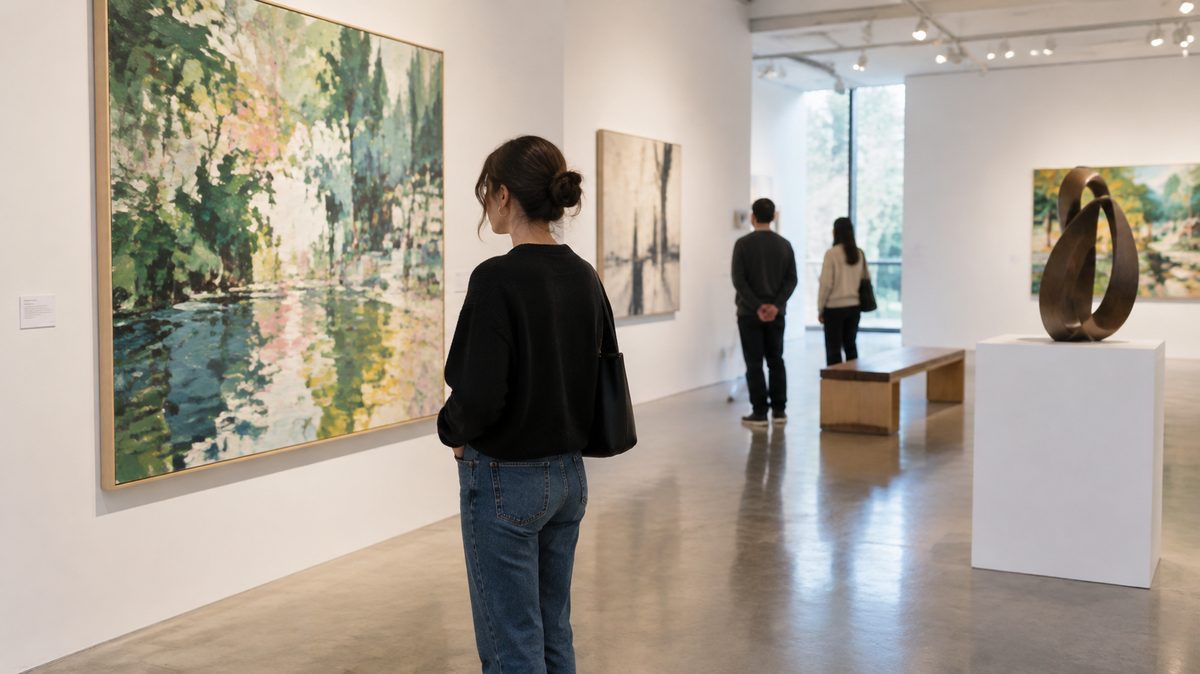
The program changes, so there is no fixed collection experience to promise. One visit may feature painting and sculpture. Another may centre on photography, film, installation, textiles or performance. This range reflects the wider field of Visual arts rather than a single style.
Exhibitions often connect Art with lived experience, local identity or public debate. A display may ask visitors to think about housing, migration, culture, work or the environment. That does not mean every show feels serious or difficult. Humour, colour and personal memory can carry complex ideas in a form that feels direct.
Contemporary art can seem unclear when a visitor expects each work to provide one correct message. A better method is to separate what you see from what you think it means. Notice the material, size, sound and placement first. Then read the label and compare the artist's stated idea with your own response.As a hypothetical example, a pile of common objects may look random at first. After reading that the objects were collected from one street, the work may become a record of waste, trade or daily habits. You do not have to like the piece for the idea to become clear.
How can you get more from the exhibition?
Read the main room text before the individual labels. It explains the shared idea behind the show and gives names or terms that may appear again. Keep that frame in mind, but look at each work before reading its full label. Your first response is useful evidence.
Pick two works that feel different and compare them. Ask what each artist wants you to notice, which materials carry the idea and how the room changes your response. This turns a walk through the space into active viewing without requiring formal art training.
Use a three-pass method if the show feels dense. On the first pass, scan the whole room. On the second, stop at the works that draw you back. On the final pass, read the supporting text and revisit one piece with that new context. This method keeps long wall text from controlling the visit too early.
Ask staff a focused question when you need help. Try asking whether an artwork has a local link, how a process works or whether a video has a set start time. Staff can point you towards useful context without deciding what you should think.
Photography rules may change between exhibitions because artists and lenders set different limits. Check signs or ask before taking a photo. Keep the flash off unless staff say it is allowed, and avoid blocking a narrow viewing area while framing a shot.
Is the gallery suitable for children and first-time visitors?
Yes. Its modest size makes it a practical first gallery visit. Families can leave before attention fades, while adults who feel unsure about Contemporary art can explore without facing a vast museum.
Check the exhibition description before bringing young children. Some works may include strong language, loud sound, darkness, adult topics or images that need explanation. An official content note gives parents a better basis for deciding than the exhibition title alone.
Set one simple rule before entering: look without touching unless a sign invites interaction. Installations may sit on the floor or use familiar objects, so the boundary between artwork and furniture may not be clear to a child. Stay close enough to guide them without turning the visit into constant correction.
A useful activity is to ask a child to find one shape, one material and one surprise. Do not demand the artist's meaning. Their answer may reveal a detail adults missed, and it gives them a real role in the visit.
What access and comfort details matter?
The gallery is part of a public civic building, but visitors should confirm the route that fits their needs. Historic buildings can have several doors, and the nearest visible entrance may not be the step-free one. Ask staff for clear directions before arrival if stairs are a barrier.
Check the planned format of talks and performances. A standing opening differs from a seated presentation. Ask about seating, accessible toilets, hearing support and assistance-animal access when any of these features will decide whether the visit works for you.
Light and sound can shift with each installation. A video show may use dark rooms and sudden audio. A sculpture display may create narrower paths than an open wall-based show. Visitors with sensory needs can ask when the gallery is usually quieter and whether the current exhibition contains flashing images or loud sound.
Wear comfortable shoes. Even a small gallery visit involves slow standing, which can feel harder than steady walking. If you need to rest often, ask where seating is available rather than leaning on a display case or wall.
When is the best time to visit?
Choose a regular weekday session for quiet viewing. Choose an opening or artist talk when you want context and conversation. Weekends suit people combining the gallery with other activities in Brunswick, though the surrounding shopping strip may feel busier.
Choose a date within the advertised exhibition run and check whether an opening, installation period or public program changes access. Crowd levels vary, so ask staff if quiet viewing matters.
Weather affects the wider trip more than the indoor visit. On hot or wet days, keep the plan compact and confirm that transport is running normally. If you want to explore Sydney Road afterward, choose a time that leaves daylight for walking and browsing.
What can you do nearby without losing focus on the visit?
The gallery's position supports a simple half-day plan. Arrive, see the exhibition, then choose one nearby meal or short walk. This keeps the Art as the main event while making the journey worthwhile.
Sydney Road offers cafes, bakeries, restaurants and shops across many price points. Pick a place after viewing if the exhibition has no fixed event time. If you are attending a scheduled talk, eat first and leave a buffer for service delays.
The Brunswick Town Hall precinct also helps visitors understand the gallery's public role. It operates within a civic setting rather than a private sales space. Merri-bek City Council supports a program intended for public access, cultural exchange and local participation within the City of Merri-bek.
Keep extra plans flexible. An exhibition that seems small online may hold your attention longer in person. Large works, layered sound and detailed labels can change how long a room takes to view.
What visit plan works best?
- Confirm the session. Check the official exhibition dates, opening hours, content notes and booking rules on the day of travel.
- Choose the full route. Compare tram, train, bus, cycling and parking options, then allow time to find the correct entrance.
- Start with one full scan. Walk through the exhibition before reading every label or taking photos.
- Study what pulls you back. Choose two works, compare their materials and read the supporting text.
- Ask one useful question. Speak with staff about a local link, artistic process or part of the display you did not understand.
- Leave time for one nearby stop. Add a meal or short Sydney Road walk without packing the day too tightly.
Your next step is to check the current Counihan Gallery listing from the City of Merri-bek, choose your transport and set aside 45 minutes for the exhibition.
Official visitor information: https://www.merri-bek.vic.gov.au/exploring-merri-bek/arts-merri-bek/counihan-gallery/counihan-gallery-in-brunswick-/. The council lists free entry at 233 Sydney Road, with entry through the Sydney Road glass doors; the gallery is to the left of the customer service centre. Check hours, seasonal closures and group bookings directly. Reviewed 11 October 2026.
Explore more local guides at https://brunswicklocal.pages.dev/.
Image: AI-generated editorial illustration; it does not document a particular venue or visit.