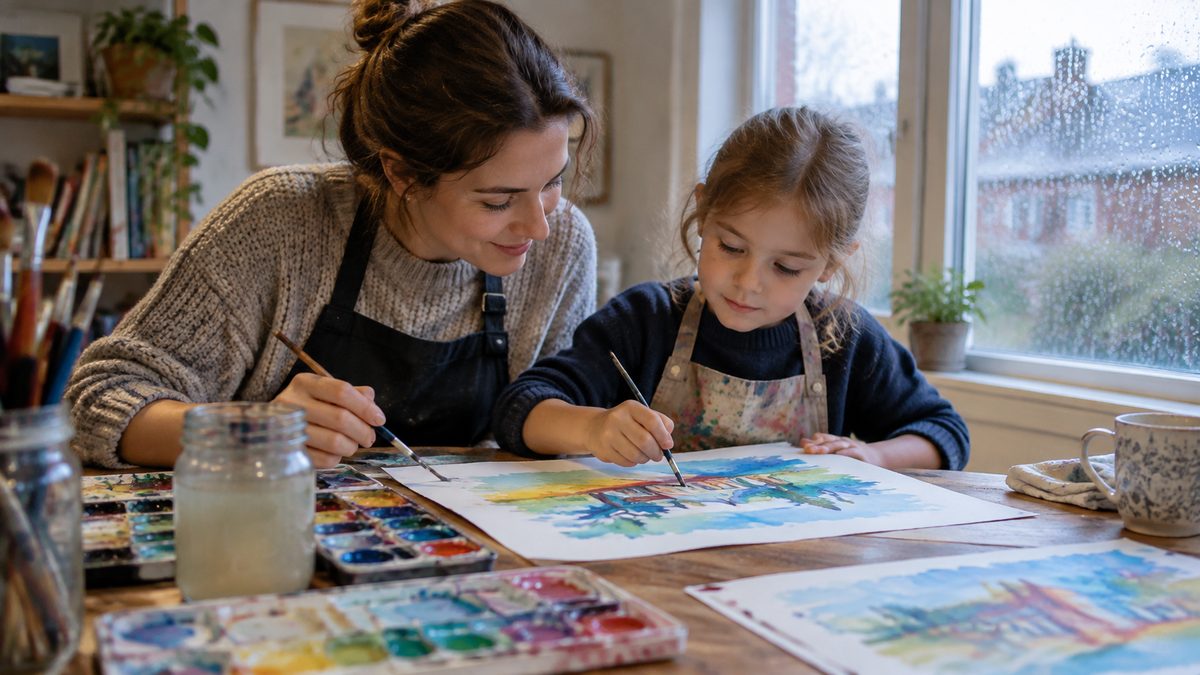
Brunswick Rainy Day Arts Activities
The best Brunswick rainy day arts activities are simple projects that suit your time, budget, and tolerance for mess. You can book a local Workshop, visit an indoor art space, or make something at home with basic supplies. The right choice turns a wet day into useful creative time without forcing you to carry half an art shop through the rain.
The main idea is simple: choose the activity by its setup cost, drying time, and level of help needed. Painting may suit a long afternoon. Drawing works when you have one quiet hour. Pottery gives you a guided experience, while a Paper project can save a family day with almost no planning.
Which activity fits the time you actually have?
Start with the clock. Many rainy-day plans fail because the activity takes longer to prepare than people expect. A 30-minute window calls for pencils, collage, or quick prints. Two free hours allow for paint, Clay, or a booked class.
For a short session, choose Drawing. Set out plain paper, pencils, an eraser, and one object from the room. Draw the same object from two angles. Children can pick a shoe, toy, or piece of fruit. Adults can use a cup, plant, or view through the window. This removes the pressure to invent a subject.
For a longer session, Painting works well because it can grow with your attention. Begin with one small board or thick sheet rather than a large canvas. Pick a limited set of colours. Paint a wet Brunswick street, the shape of local rooflines, or reflections from shop windows. A narrow subject often produces a stronger result than an open request to “paint anything.”
If you have half a day, consider a studio class or Pottery session. Booking gives the day a firm shape. It also moves the mess, tools, and cleanup out of your home. Check the session length and whether finished work must be collected later after firing.
Should you stay home or book a local session?
Stay home when the weather is rough, children are tired, or you want to keep costs low. Book a local session when you want expert help, specialist equipment, or a clear social activity.
A home project gives you control over noise, breaks, and pace. It also lets you use supplies you already own. The weak point is setup. If the table is crowded and every tool is buried in a cupboard, interest can fade before the activity begins. Prepare one tray with the full kit and keep the task small.
A booked Workshop removes many choices. Someone else provides the materials and explains the process. This helps beginners who feel stuck when faced with a blank page. It can also suit a pair of friends who want to talk while their hands stay busy.
Before booking, confirm the age range, access, cancellation rules, and finishing process. Ask whether the fee covers every material. Some Clay sessions include glazing and firing, while others charge for those steps by item. Check whether wet work can be carried home safely in the rain.
Brunswick has busy shopping streets and quieter side roads, so travel affects the choice. Pick a venue close to a tram, train, bus route, or safe parking option. A ten-minute walk may feel much longer while carrying artwork under an umbrella.
What can children make without filling the house with mess?
Use dry materials first. Paper, pencils, crayons, tape, and child-safe scissors cover a wide range of projects. Place everything on a washable mat or old towel. Give each child one shallow tray so loose pieces stay in one area.
Build a rainy-street collage
Cut shopfronts, windows, signs, people, and umbrellas from coloured paper. Arrange them into a Brunswick street scene. Add puddles with foil or blue scraps. Older children can include signs based on places they know. Younger children can tear shapes instead of cutting them.
Make a cardboard creature
Use a cereal box, tape, and scraps to build an animal or invented creature. This form of Craft teaches planning because flat pieces must become a stable object. Ask the child how it will stand before adding details. That one question often improves the whole build.
Create a window weather diary
Divide a page into four boxes. Every 20 minutes, draw the view or the shape of the rain. The scene may appear unchanged, but the light, people, cars, and puddles will shift. This turns close observation into an activity and gives restless children a reason to return to the window.
Keep the finish line clear. “Make one creature” works better than “have an art afternoon.” A defined result helps children start and makes cleanup easier.
Which projects work for adults who think they are not creative?
Choose a process with rules. A clear limit reduces the fear of making a bad choice. Creativity often appears after the first few marks, cuts, or shapes.
Try a two-colour sketch of a familiar Brunswick scene. Use one dark pencil and one coloured pencil. Draw the large shapes first. Ignore tiny details until the end. The result does not need to look like a photo. Its job is to record what caught your eye.
Another option is a small Printmaking project. Cut simple shapes from thin foam, press lines into the surface with a blunt pencil, roll on a light layer of ink or paint, and print onto cards. Test the design on scrap material before using good stock. Reverse any words because the printed image will face the other way.
Collage also suits people who dislike drawing. Choose one theme, such as wet streets, local food, music posters, or garden plants. Limit yourself to one page. Arrange every piece before using glue. This makes it easy to change the layout without tearing the base.If choosing an idea feels difficult, start with a small test. What works better is making one rough version first. The early version reveals which parts are worth keeping. Treat it as a test, not a failed final piece.
How do you set up Painting without damaging a rental?
Protect the floor before opening any paint. Use a wipeable table covering, an old shower curtain, or flattened cardboard under the work area. Keep paint in small amounts on a plate rather than placing full bottles on the table. Close each bottle as soon as you pour.
Water-based paint is the easier choice for a wet day indoors. Use thick paper that will not buckle at the first brush stroke. Keep one water jar for washing brushes and another for clean water. This prevents muddy colour.
Set a drying area before you begin. A cleared shelf, laundry rack, or sheet of cardboard on top of a cupboard can hold finished work. Do not leave wet pages on the floor where feet, pets, or dripping coats can reach them.
If children are taking part, give them fewer colours and larger brushes. Too many supplies create spills and slow decisions. For adults, a small canvas board is easier to store than a stretched canvas and less likely to warp.
Can you try Clay without owning pottery tools?
Yes. Air-dry Clay needs only a clean surface, a cup of water, and a few household tools. A butter knife can cut edges. A spoon can smooth a curve. A toothpick can add lines and small holes.
Make something compact, such as a pinch bowl, plant marker, small figure, or ring dish. Thick lumps dry slowly and may crack. Keep the form even, join pieces with scored surfaces, and use only a little water. Too much water turns the surface soft and weak.
Clay from a Pottery studio follows a different process. It may need controlled drying, kiln firing, glazing, and a second firing. Do not place studio clay in a home oven. Ask the teacher which steps are included and when the finished item will be ready.
A studio session is the stronger choice if you want to use a wheel or make food-safe tableware. Home air-dry projects are better for ornaments, models, and decorative pieces. Keeping that difference clear prevents disappointment.
How can you make Printmaking safe and simple?
Begin with a method that does not need sharp carving tools. Foam sheets, flat leaves, textured packaging, and cut cardboard can all form printing plates. Apply a thin coat of water-based paint with a sponge or small roller. Press the plate onto Paper and rub the back with a clean hand.
Make one test print before changing the design. Pale gaps mean the surface needs more even pressure or a little more paint. Blurred edges usually mean too much paint was applied. Adjust one thing at a time so you can see what solved the problem.
Create a set rather than one isolated print. Repeat the same plate in different colours, rotate it, or overlap it. Repetition makes a basic shape feel planned. Finished prints can become cards, bookmarks, wrapping sheets, or a small wall series.
What should you bring to an arts venue on a wet day?
Carry a compact waterproof layer, a closed drink bottle, and a bag that keeps finished work flat. A reusable shopping bag protects large items, but a rigid folder is better for Drawing and Paper work. Add an old hand towel if the activity involves paint or clay.
Wear clothes that can handle a mark even when aprons are supplied. Closed shoes provide better grip on wet paths and studio floors. If a child needs a snack, check the venue rules before packing food because some work areas must stay food-free.
Arrive with enough time to remove wet coats and settle in before instructions begin. Late entry can mean missing the safety notes or first process step. If the weather may disrupt transport, save the venue contact details before leaving home.
How do you choose a project that people will finish?
Match the project to skill and energy, then reduce its size. A postcard painting is easier to finish than a large canvas. One printed pattern is easier than a full book. A small clay dish is more realistic than a detailed sculpture.
Use these checks before starting:
- Can the project be explained in one sentence?
- Are all materials ready now?
- Is there a safe place for the work to dry?
- Can the maker stop after one useful stage?
- Will the finished item fit in the trip home?
Do not force a perfect result. The best rainy-day activity leaves people willing to try again. Save one piece, photograph work that cannot be kept, and clean up while materials are still easy to wash.
What is a simple rainy-day plan for Brunswick?
Check the forecast and travel conditions first. Decide whether you will stay home or attend a booked session. Then choose one activity, prepare its materials, and set a finish time. Keep a dry backup ready in case travel becomes hard or a venue session is full.
A useful home plan is 45 minutes of Drawing followed by a snack and a short collage project. A useful outing plan is one booked Workshop with a nearby indoor stop for food. Avoid packing several major activities into the same day. Wet travel, coats, and cleanup add effort that a schedule rarely shows.
Choose your activity now, place every needed item in one tray, and set a start time before the next rain shower arrives.
Two verified indoor options are the free Counihan Gallery at 233 Sydney Road (check exhibition hours and closures: https://www.merri-bek.vic.gov.au/exploring-merri-bek/arts-merri-bek/counihan-gallery/counihan-gallery-in-brunswick-/) and Brunswick Library at the Sydney Road/Dawson Street corner (https://www.merri-bek.vic.gov.au/libraryhours). Check library events separately; a walk-in visit does not guarantee a workshop place. Home projects above are editorial suggestions, not accounts of attended classes. Follow material labels and supervise children. Reviewed 11 October 2026.
Explore more local guides at https://brunswicklocal.pages.dev/.
Image: AI-generated editorial illustration; it does not document a particular venue or visit.